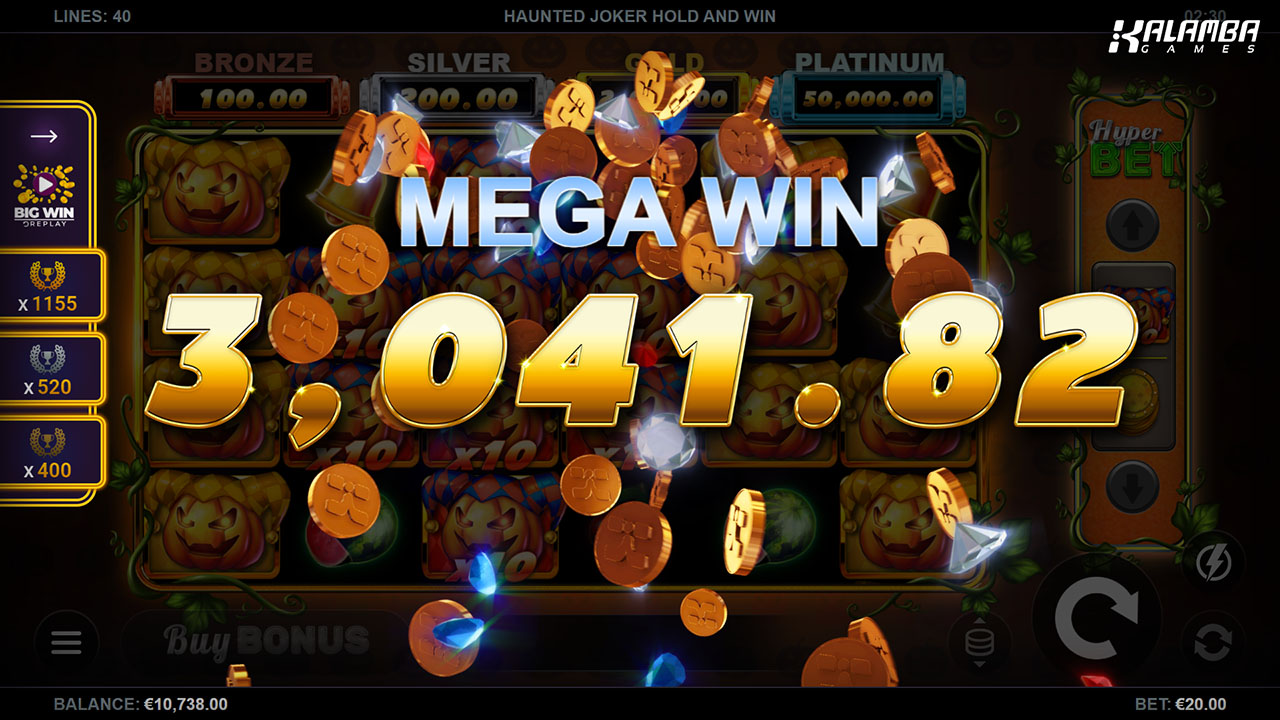
Hold and Win Games merge a simple reel mechanic with a hold-and-collect feature that can produce substantial payouts in a single spin sequence. Players lock matching symbols in place while the remaining reels keep spinning, and every new match lengthens the round. The format is now present in dozens of titles across major providers, each adjusting the core loop to different themes and volatility profiles. Understanding how the mechanic progressed, how it works with paylines or ways-to-win, and how its RTP and bonus structures influence returns helps players choose whether the format fits their bankroll and session length. This guide explores the historical evolution, technical specifications, and practical play steps for the Hold and Win Games format so readers can judge titles before committing funds.
Comprehensive Guide to Playing Hold and Win Games
Start by selecting a licensed operator that features the chosen title and verify that the game runs in the browser or app without additional plug-ins. Tune the coin value and bet level so the total stake per spin fits your session budget, keeping in mind that hold sequences may continue across several spins. Hit the spin button to begin; regular line wins pay immediately, while any special coin or token symbols remain in place and start the re-spin counter. Each re-spin reloads the non-locked reels, and new matching tokens reset the counter, proceeding until no new tokens land or the maximum number of re-spins is attained. At the end of the sequence, all collected tokens are evaluated according to the paytable, and any multipliers or jackpot symbols are used before the round finishes. Examining the on-screen history panel after each round aids track average sequence length and shapes future stake adjustments. Players in the United Kingdom should also confirm that the operator presents the current RTP on the information screen, because some studios release multiple RTP versions of the same title for different markets.

Once the hold sequence finishes, the game reverts to its base state and the next paid spin starts a fresh cycle. Permit the reels to come to a complete stop before tapping the spin button again, because some platforms detect rapid clicks as an attempt to skip animations. While the outcome is already set by the random number generator, bypassing animations can obscure valuable information about symbol distribution that may influence future stake decisions. Taking a brief pause between spins also promotes more disciplined bankroll management, because it gives a natural moment to review whether the current sequence length fits the original session plan.

Evaluating New Releases and Checking for Authenticated Updates
Before engaging with a newly launched Hold and Win title, compare its published RTP and volatility against established benchmarks in the same sub-genre. Search for an independent test certificate from a recognised laboratory presented on the game information screen or the operator’s responsible-gaming page. Examine the paytable for any caps on multiplier stacking or jackpot contributions that could affect maximum exposure. If the title includes a progressive jackpot, establish whether the pool is local or networked, because this distinction influences both the advertised ceiling and the frequency of minor payouts. Keeping a personal log of sequence lengths and average returns over at least one hundred spins provides empirical data that complements the theoretical RTP figure. By systematically reviewing these elements, players can decide whether a new release aligns with their preferred risk profile and session objectives. In the United Kingdom, the presence of a UK Gambling Commission licence number on the operator’s homepage provides an additional layer of assurance that the title has undergone local compliance checks beyond the laboratory certification.
Another practical step is to review recent player feedback on independent forums, concentrating on comments about actual sequence lengths rather than anecdotal win stories. Although individual results vary, patterns in reported frequency can indicate whether the published volatility rating matches real-world experience. When several players note unusually long gaps between hold sequences, it may be beneficial selecting a lower-volatility alternative for shorter sessions. Conversely, consistent reports of frequent but modest sequences reinforce the suitability of the title for extended play within a controlled bankroll.
Standard Reel Layouts, Paylines, and Ways-to-Win Configurations
Most Hold and Win Games utilize a five-reel, three-row grid with ten, twenty, or twenty-five fixed paylines. A smaller subset grows to four rows and fifty lines, while others use a 243-ways system that rewards for adjacent symbols regardless of line trajectory. Because the hold mechanic works on special coin or token symbols rather than line matches, the payline count mainly influences base-game line hits rather than the bonus sequence itself. When reviewing a title, players should check whether the hold symbols must land on adjacent reels or can appear anywhere, as this dictates how often the feature activates. Higher-line or ways-to-win configurations increase the frequency of small base hits, which can offset the longer sequences that happen once the hold round begins. In titles that use fixed paylines, the placement of token symbols on the middle three reels often produces the highest activation rate, because those positions meet the greatest number of active lines.
Four-row variants introduce an additional layer of strategy for players who prefer to track symbol distribution. With twenty symbols visible instead of fifteen, the probability of landing at least three token symbols on any given spin grows, yet the extra row also dilutes the value of each individual line hit. Developers balance by modifying the token paytable so that the average return remains within the published RTP band. Players who favor a denser grid should therefore ensure that the increased activation frequency does not come at the cost of lower token values, which can smooth the payout curve and lessen the excitement of extended Hold and Win sequences.
Main Bonus Features: Free Spins, Wilds, Scatters, and Multipliers
Wild symbols in Hold and Win Games stand in for regular pay symbols on active lines and can also lock in place during the hold sequence, raising the chance of additional matches. Scatter symbols usually initiate a separate free-spin round that inherits the same reel layout, letting players collect hold tokens without wagering extra credits. Multipliers may appear as independent symbols or attach themselves to collected tokens, increasing the final payout once the hold round concludes. Some titles include a progressive jackpot level that requires a minimum number of collected tokens before it becomes active, while others cap the multiplier at a fixed ceiling. Examining the paytable before play reveals whether multipliers apply to line wins, to the hold-sequence total, or to both, which directly affects expected return during extended sequences. In many UK-licensed releases, the free-spin round also carries its own RTP contribution, which is disclosed separately so players can comprehend how the bonus mode influences overall return.
Wild symbols that lock during the hold sequence add another strategic dimension. Because each wild remains in place for the duration of the re-spins, it effectively boosts the number of token positions that can be filled on subsequent spins. This interaction can turn an otherwise modest collection into a high-value outcome, especially when the wild also carries a multiplier. Players should therefore study the paytable to confirm whether wild symbols retain their multiplier when they lock, because this detail can significantly change the expected value of an extended sequence.
RTP Ranges and Risk Profiles Between Providers
Hold and Win titles commonly list RTP figures from 94.5 percent to 96.5 percent, with most concentrated around 95.5 percent. The RTP calculation includes the base game plus the hold sequences, meaning the number already factors in the bonus spins created by locked symbols. Volatility gravitates to a medium-high level because a large share of the return is concentrated in the hold feature; sessions can produce long stretches of low-value line wins followed by one high-value hold round. Gamblers should compare the stated RTP with the maximum exposure shown in the paytable, because some titles allocate a greater percentage of RTP to the jackpot or multiplier symbols that only appear during the hold sequence. Changing stake size based on these volatility trends enables bankroll distribution to fit session time targets. In the U.K., where online-gaming rules mandate transparent RTP disclosure on the game info screen, players can quickly compare these figures across multiple operators before selecting a title.
Volatility also affects gaming session length. A medium-volatility Hold and Win title might produce a hold sequence every twenty to thirty spins, but a high-volatility equivalent could demand fifty or more spins prior to the feature showing up. Since each sequence may use up several extra spins, the real expense per feature rises in the latter situation. Gamblers with shorter playtimes consequently profit from selecting titles with reduced volatility and more frequent, yet smaller, hold features, whereas those ready for extended sessions can withstand the greater variance in return for the chance of bigger total payouts.
In what way Hold and Win Differs from Traditional and Megaways Slots
Classic slots are based on fixed paylines and a single spin resolution, whereas Megaways titles grow or shrink the number of symbols per reel on every spin. Hold and Win slots occupy a middle ground: the reel layout stays constant, yet the hold sequence in effect creates multiple re-spins within one paid spin. This structure eliminates the need to track changing payline counts while still delivering the repeated-win potential that Megaways players like. The difference is important for bankroll planning because Hold and Win rounds can use up several bets before the sequence ends, whereas a Megaways spin resolves immediately. Players who like predictable reel heights and transparent symbol counts often shift to Hold and Win titles after going through the volatility spikes common in variable-ways formats. In practice, the hold mechanic also lessens screen clutter, because the locked symbols remain visible in their original positions rather than being replaced by new reels that hide earlier outcomes.
Another distinction is found in the distribution of return across the paytable. Classic three-reel games tend to assign a large share of RTP to frequent small line hits, whereas Megaways titles transfer value toward rare but substantial chain reactions. Hold and Win titles divide the difference by focusing a significant portion of the return inside the hold sequence itself. Consequently, base-game line hits may appear modest until the hold feature kicks in, at which point the accumulated tokens can produce a payout several times larger than any single line combination. This payout rhythm suits players who enjoy a steady rhythm of small results punctuated by occasional extended sequences, rather than the constant micro-fluctuations common of Megaways grids.
Roots of the Hold & Win Feature in Slot Game Development
The Hold and Win system emerged when developers tried to revitalize the classic three-reel fruit-machine format without introducing extra paylines. Initial prototypes retained three reels but replaced the traditional nudge or gamble feature with a locking mechanism that secured matching symbols in place. The initial commercial release arrived around 2017, and within two years the design had extended to five-reel grids. Creators observed that the hold sequence produced tension comparable to a bonus round yet needed no separate trigger, allowing the base game itself to provide extended play sequences. The system also proved versatile to both fixed and ways-to-win systems, offering studios adaptability when scaling reel height or symbol count. By 2020, more than thirty licensed titles utilized the hold loop, and the structure had evolved into a distinct sub-genre rather than a one-off experiment. First adopters in the United Kingdom rapidly recognised the allure of the hold loop because it offered repeated reel action within a single paid spin, keeping sessions captivating without the need for separate bonus triggers. This efficacy helped the design obtain prominent placement on many UK-facing casino lobbies, where players appreciate transparent mechanics that do not depend on hidden triggers or complex payline calculations.
Further refinement came when studios started trying with token values that could be upgraded mid-sequence. Instead of giving a flat credit amount, some titles launched escalating multipliers that connected to each newly locked token, transforming a modest three-symbol collection into a payout several times larger. The alteration necessitated careful balancing of the random number generator so that the increased ceiling did not drive the overall return-to-player figure outside the acceptable regulatory band. Assessment houses in Great Britain therefore insisted on extensive simulation runs before validating each new release, guaranteeing that the advertised RTP remained exact across millions of spins. These regulatory hurdles slowed the pace of innovation but ultimately bolstered player trust, because every approved title bore an independent verification stamp that could be checked on the operator’s information page.
Stake Range, Token Values, and Top Win Potential
Wager options typically begin at 0.10 credits per spin and rise to 100 credits, even though some premium titles extend the upper limit to several hundred credits for high-roller accounts. Coin value is frequently modifiable in increments of 0.01, permitting precise bankroll calibration. The maximum advertised win typically ranges between 5,000x and 20,000x the base bet, with the top figure usually reserved for collecting every token position during a single hold sequence. Fixed jackpots appear in lower-volatility titles, whereas progressive jackpots tie across operator networks and can exceed several thousand times the stake. Players should note that reaching the maximum win necessitates both the highest-value tokens and the longest possible hold sequence, an outcome whose probability is reflected in the published RTP and volatility metrics. In the United Kingdom, operators must also display the maximum stake permitted under local regulation, which can differ from the theoretical maximum listed in the game rules.
Progressive jackpots bring in an additional variable because the pool size fluctuates in real time. When the displayed jackpot exceeds a certain threshold, the expected value of each spin increases, yet the contribution percentage taken from each bet remains constant. Players who track jackpot levels can therefore time their sessions to coincide with above-average pools, although the difference in expected return is usually modest unless the pool has grown unusually large. Keeping a simple log of jackpot size at the start of each session helps identify these opportunistic windows without requiring complex calculations.
Typical Errors and Ways to Prevent Them In the Course of Extended Sequences
One frequent error is raising the wager mid-sequence hoping for a large payout, which shifts the RTP calculation and might drain a bankroll faster than planned. Another issue arises when players fail to notice the difference between fixed and progressive jackpot contributions; titles with progressive pools might promote higher maximum wins but dedicate a smaller percentage of RTP to the base game. Setting a predetermined number of spins or a loss limit before starting avoids impulsive adjustments. It is also helpful to verify whether the hold symbols need to show up on consecutive reels or may appear in any position, because misunderstanding this rule leads to incorrect expectations regarding feature frequency. Finally, verifying that the game has returned to its base state after each hold round prevents accidental re-triggering with an unintended stake size. In the United Kingdom, where session reminders are mandatory, players may utilize the on-screen clock to synchronize these limits with the operator’s mandatory break prompts, strengthening disciplined play without additional effort.
A less obvious error involves misreading the token collection meter. Some titles show a progress bar that fills as tokens land, yet the bar could reset if a new sequence begins before the previous one concludes. Players who presume the meter carries over between spins could overstate their proximity to a jackpot trigger. Checking the paytable for any reset conditions forestalls this confusion and guarantees that stake decisions stay based in the actual rules as opposed to visual assumptions.